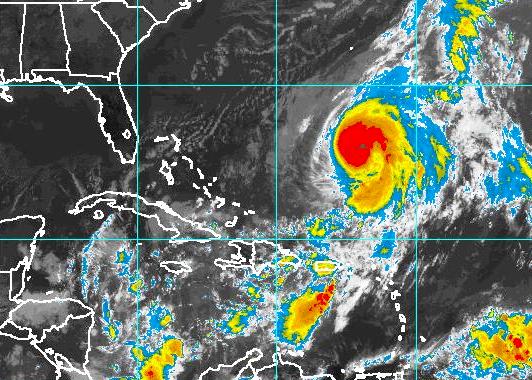
With the official close of the 2010 Atlantic hurricane season still a week away, the season in pretty much all respect, is over. Sure a late-season storm or two could pop up, but the general pattern observed over the past couple weeks looks to continue, therefore furthering unfavorable conditions for development.
So... how did the season add up? The usual skeptics will say it was a bust, but in my opinion 2010 was remarkably awesome for several reasons – we reached the predicted numbers making the 2010 season one of the most active in history, and while the U.S. experienced little impact, NOAA hit the nail on the head with its early season prediction, calling for:
14 to 23 named storms
8 to 14 hurricanes
3 to 7 major hurricanes
Now check out the actuals:
Average (1966–2009)
2010
Named Storms
8
19
Hurricanes
4
12
Major Hurricanes
1
5
Pretty darn amazing eh? Here's a look at the hurricanes of 2010...
The Weathervein is back and we're recapping the tropics and providing the latest information on soon-to-be Hurricane Paula in the northwest Caribbean, as well as a developing nor'easter for the northeast U.S. later this week! Check it out here in Episode 16 of The Weathervein!
You might be wondering what the numbers in the title of this post refer to. Well wonder no more because I'm going to tell you these numbers reference the scorecard for the 2010 Atlantic hurricane season – a season that will go down in the record books as one of the most active in history!
Wait, what!? How can it be one of the most active?
You mean you haven't heard that more than half the storms, major hurricanes included, have gone out to sea as 'fish storms?' That's right... it's been a very active hurricane season but with little U.S. impact, who knew?!
With the formation of Hurricane Otto today, the 2010 Atlantic hurricane season now features a total of 17 storms, 15 of which have been named and of those, 8 became hurricanes. Of those hurricanes, 5 were majors (category 3, i.e. 115 mph or higher). A typical hurricane season produces about 10 storms, of which 6 become hurricanes.
Before the start of hurricane season experts warned of the threat of not only an active season but a very high impact one, however, as mentioned and observed, U.S. impact has been quite minimal outside of a few tropical storms, a depression and glancing blow from Hurricane Earl.
While we are hitting the numbers big time, somewhat unexpected atmospheric conditions have steered a great number of storms away from U.S. coastlines. Who's complaining right? Well, aside from the storm chasers and weather enthusiasts!
Hurricane tracks are greatly influenced by the aforementioned atmospheric conditions. The upper level currents steer hurricanes in a variety of ways and storm tracks are highly dependent on where the storms form and the steering currents at that particular time. According to National Hurricane Center (NHC) Director, Bill Read, with the weather pattern that was in place and the fact that this season's storms formed so far out to the east, it's not surprising that they turned off to the north. As soon as you find a weakness in the big high (known as the Bermuda High) you'll get that effect. This follows the same methodology that Greg Nordstrom and I refer to often in The Weathervein. When storms form east of 35W longitude they will 9 out of 10 times curve out to sea.
Time will tell what the remainder of hurricane season will bring but we only have 6 names left on the list before they are used up. Those names are Paula, Richard, Shary, Tomas, Virginie and Walter. Thereafter we would be required to begin using the Greek alphabet as we did only one time before – in 2005. However, time is running out.
An online video talk show offering a blood pumping new look at weather from a personal perspective!
The Northeast Quadrant Radar
About The Northeast Quadrant
The Northeast Quadrant is a highly informative blog and global interactive social community for the weather obsessed, written and managed by the weather obsessed!
Near daily blog posts and news shares about ever-changing weather patterns, the evolution of dynamic storm systems, the controversy surrounding climate change; and its effects on our cities, nation and the world, The Northeast Quadrant takes you beyond the weather and brings you closer to science through its unique presentation of incredible news stories and vibrant personal experiences! With thousands of web hits directly on the blog, hundreds of Facebook fans, and Twitter followers, and an overwhelming viewer audience on YouTube, The Northeast Quadrant continues to grow!
Bookmark and subscribe to http://northeastquadrant.blogspot.com/ and enjoy! In doing so you'll join the global community from countries around the world that regularly visit The Northeast Quadrant.
What are people saying about The Northeast Quadrant?
"Congratulations to The Northeast Quadrant for making weather fun! This is not the kind of information you get from your local weatherperson." – Janette from Washington, DC
"I am in the midst of grueling Navy Weather Forecasting school. It's fun sometimes, but we don't really get into anything outside of the subject matter. I appreciate The Northeast Quadrant because it's an interesting look at weather and facts. It provides a much needed break from mundane, tedious weather lessons! Thanks Devin!" – Mack from Biloxi, Mississippi
"I really enjoy reading The Northeast Quadrant! Devin does a great job and keeps things interesting. You can see the passion he has for the tropics and that's something I always respect! I have learned as a teacher of meteorology, that you can't teach passion – you either have it, or you don't!" – Greg from Starkville, Mississippi
"Throughout all the recent Icelandic volcanic news, we at Know Your Money like to keep updated with blogs to discover their opinion of what is going on. The Northeast Quadrant offers a great deal of interest to us with regards to its intake on weather etc., and its impact on the economy... so thank you!" – Claire from United Kingdom
"I visit The Northeast Quadrant at least once a week for weather and science updates on things happening around the world. What I often find interesting is that I will read The Northeast Quadrant in the early part of the day and learn something that isn't on the news until later that night. I would be remiss if I didn't mention the fantastic pictures everyone sends in from all over!" – Staci from Union, New Jersey
"I visit The Northeast Quadrant at least 3-5 times a week. I love the pictures and funny stories, articles, quotes, etc. The blog is a good resource, it's entertaining and has valuable information. It has actually made me more interested in what is going on with the weather and why things happen." – Glen from Orem, Utah
"I find myself visiting The Northeast Quadrant more than I ever expected! I enjoy seeing Devin act so funny when he reports on various weather phenomenon. He really makes me like weather, and I particularly enjoy the photos and videos. The Northeast Quadrant has actually changed my perspective on weather and science." – Meghan from Silver Spring, Maryland
"I love The Northeast Quadrant! The information given to me is always accurate and informative. When we were listening to the news about upcoming storms this past winter, I relied on The Northeast Quadrant more than the local news. I liked watching Devin at the East River reporting and nearly getting blown away! There were always updates every few hours, and in fact I was able to prepare in advance of the storm. I also enjoy looking at and submitting personal photos pertaining to the weather!" – Robin from Edison, New Jersey
Marketing and Communications Professional; Weather Enthusiast; Recreational Storm Tracker and Reporter; and Amateur Photographer
Ever since I was a young boy I loved the weather!
There was very little that excited me more than watching The Weather Channel since its inception in 1982. Bringing weather to life was the Channel's goal, and it delivered! I remember watching the local forecast as intense lines of storms progressed towards Edison, New Jersey (where I grew up), and being called by my father to join him on the front porch as he watched the storms close in on our neighborhood. I'd run back and forth between the gusty front porch that lied beneath the darkening sky to the cool air-conditioned living room, starring at the television as I glared at the storms getting closer and closer. As the line of vibrant red's and orange's intensified, so did my interest! My obsession for weather was born, and that's where it started!
With the tools I needed at my disposal I continued to closely follow various weather phenomenon: deadly mid-western tornado outbreaks, extreme Mississippi River flooding, Hurricanes Hugo and Andrew, crippling northeastern blizzards like the '93 Superstorm, earthquakes in the Golden State, volcanoes along the Pacific Rim... you name it!
Nearly 30 years later, those who know me well would say I have not changed all that much.